

Key Features of Memorial Architecture
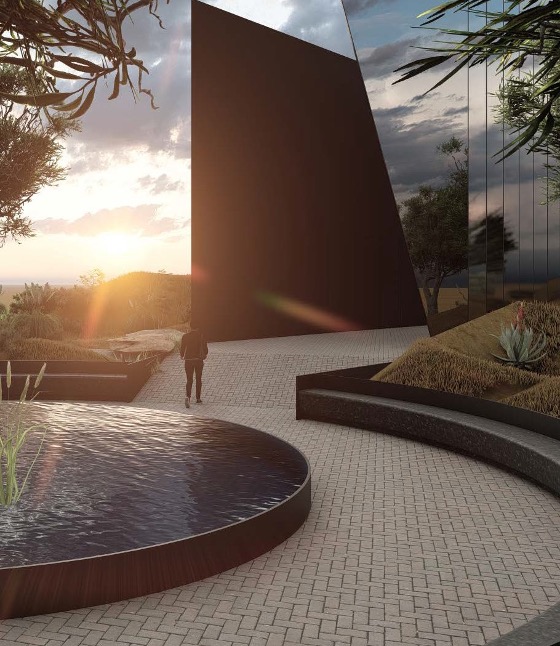
Baqhawafazi Splintered Rock
Wathint’ abafazi, wathint’ imbokodo You strike a woman, you strike aRock!
A powerful rallying cry of the women who marched to the Union Buildings on 9th August 1956 is the inspiration for the concept, which evokes images of unbreakable strength and a strong sense of unity among women of this country.

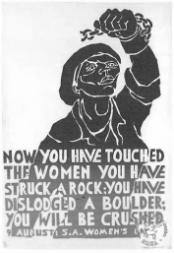
Posters from the historical Women’s March of 1956 | Visit Site
Inspiration
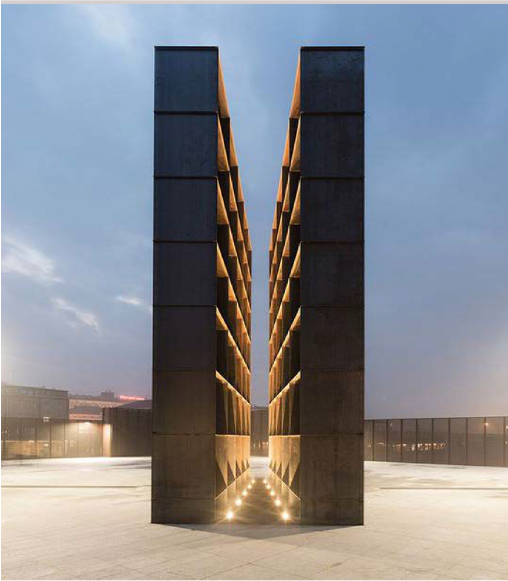

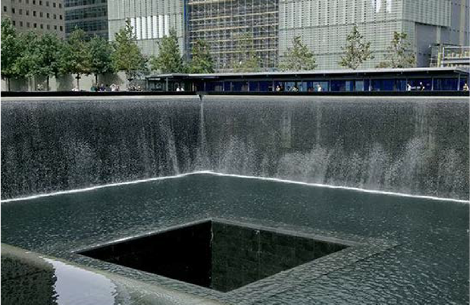
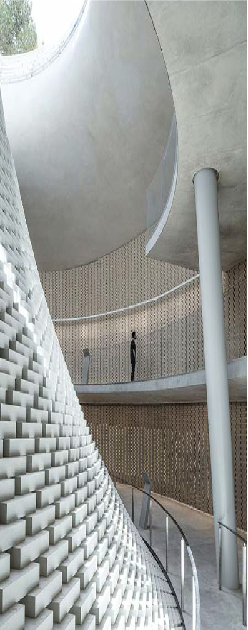
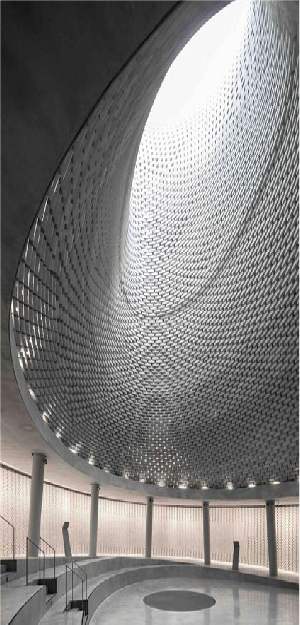
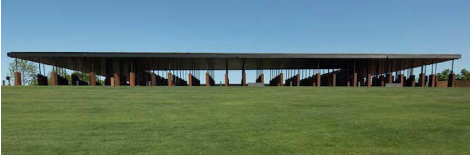
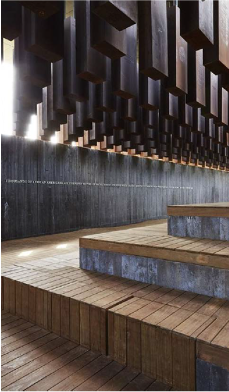
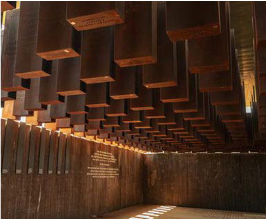
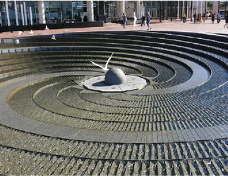
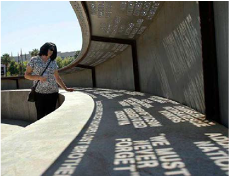
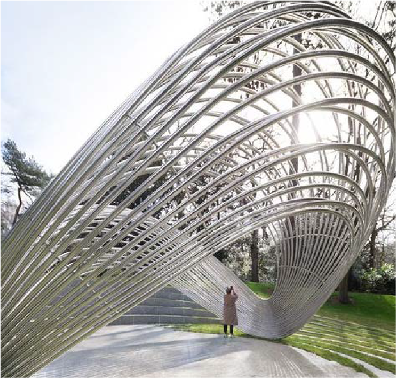
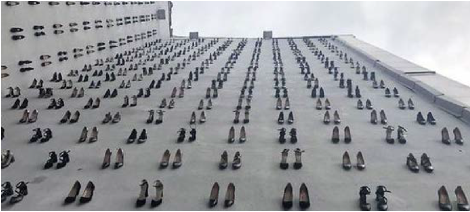
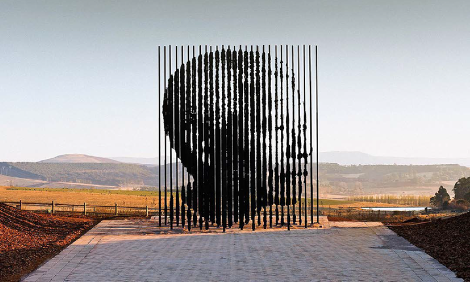
Baqhawafazi’s Wall of Remembrance – something that keeps memory alive.
In order to ensure relevance and continuity, it is imperative that Gender-Based Violence and Femicide remain urgent. A woman is murdered every three hours in South Africa. We cannot remain silent about this horrific statistic. It is impossible to ignore the issue of gender-based violence as long as it appears in the media as the next big headline.
In our research the key intervention strategies in combating GBVF and ensuring that victims are adequately supported include dialogues and interventions in relation to high-level communication and behavior change programs, the prioritization of reported cases, and the development of interventions tailored to respond to economically vulnerable situations facing women and children. In order to tell the stories of ordinary South Africans and to raise awareness, as well as to deliver a campaign that encourages social cohesion, our goal was to tell real life stories from ordinary South Africans
Key Features of Memorial Architecture
Our team has been conducting an intensive feasibility study on gender-based violence and feminicide for the past five years. In our Study, it was evident that we should build a Wall of Remembrance to honour the lives lost and to provide a home for Baqhawafazi. Our team has worked on a Memorial architecture or place making often uses elements, texture, scale, light and shadow to elevate the experience of the visitor and evoke the feeling the monument is trying to evoke in the viewer. The feeling can sometimes be awe or isolation, but it can also evoke feelings of joy and togetherness. We have made proposals based on the various uses and experiences we wish to invoke in visitors in the context of a Gender-Based Violence & Femicide memorial.
Successful memorials portrayed a clear vision of the journey our memorial wishes our visitor to experience, the feelings it wishes to evoke, the experience of the individual in the space and whether that makes them connected to the topic or disconnected from it, as well as what it intends the visitor to take with them.
To generate traction around the topic, a memorial to Gender-Based Violence & Femicide in South Africa would need to be approachable to different types of visitors, offer time for introspection and be a talking point.